Why AI-Powered Development Is Becoming Essential for Startups
Startup founders operate in an environment where speed directly affects survival. Markets move quickly, customer expectations change constantly, and competitors can emerge overnight with similar ideas. For many entrepreneurs, the challenge is no longer simply building a product. The real challenge is building it fast enough to stay relevant.
A few years ago, startups could afford long development cycles. Teams spent months designing, coding, testing, and rebuilding products before customers ever saw them. Today, that timeline is shrinking rapidly. Users expect polished digital experiences from the beginning, while investors expect visible traction earlier than before.
This shift has forced founders to rethink how products are built. Instead of relying entirely on traditional development methods, many startups are adopting AI-assisted workflows to reduce delays and improve productivity.
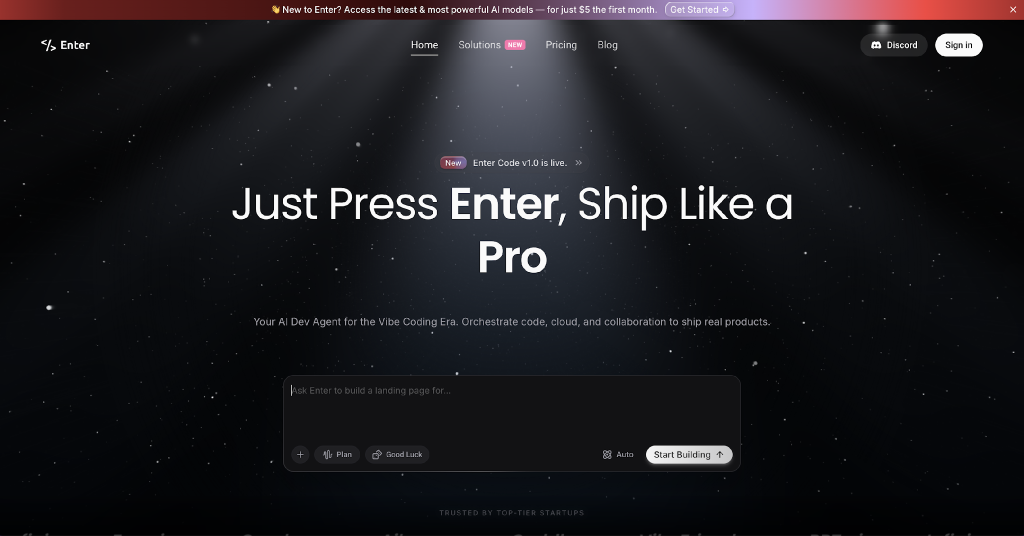
Platforms like Enter Pro are becoming valuable because they help startups simplify product development processes while maintaining operational flexibility. For lean teams managing tight budgets and aggressive launch timelines, efficiency can become a decisive advantage.
The startups moving fastest are often not the largest companies in the market. They are the teams capable of learning quickly, adapting quickly, and shipping improvements continuously.
Why traditional development workflows slow startups down
Most startups begin with limited resources. A small group of people is expected to handle product development, marketing, sales, customer support, fundraising, hiring, and operations simultaneously.
In that environment, inefficient workflows become extremely expensive.
Traditional software development often depends heavily on manual engineering work. Developers spend significant time writing repetitive structures, debugging avoidable issues, maintaining infrastructure, and handling processes that consume energy without directly improving customer experience.
These bottlenecks create several problems:
- Product launches take longer
- Iteration cycles become slower
- Teams experience burnout faster
- Development costs increase
- Innovation loses momentum
For early-stage startups, delays can have serious consequences. A slow release cycle means slower customer feedback, slower revenue growth, and slower adaptation to market demand.
This is why founders are increasingly searching for systems that help their teams operate more efficiently without immediately expanding headcount.
Operational speed has become one of the most valuable assets a startup can have.
How AI-assisted coding is changing product development
AI-powered development tools are changing the way startups approach software creation. Instead of treating coding as a fully manual process, teams are beginning to automate repetitive tasks and streamline development workflows.
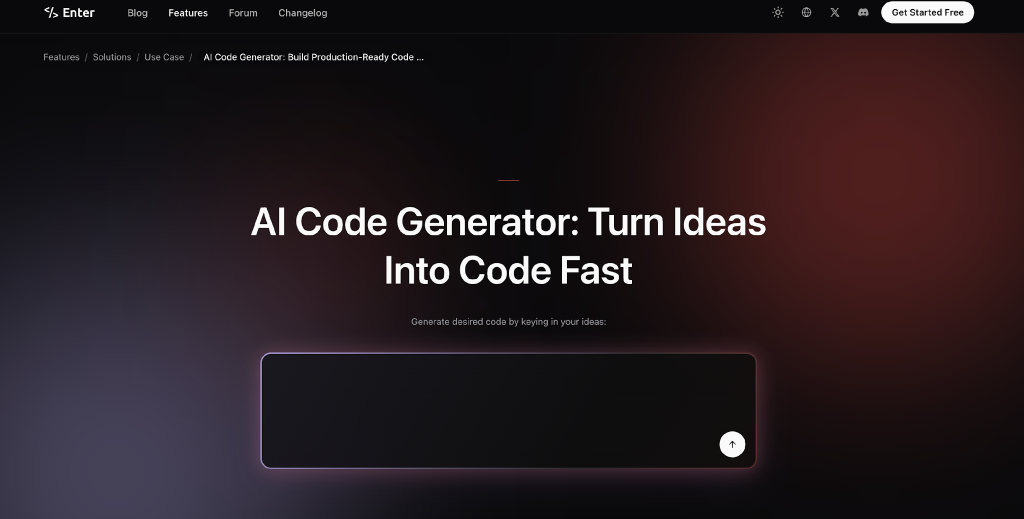
The growing popularity of the AI code generator reflects this broader transformation happening across the startup ecosystem. AI-assisted coding tools help teams reduce repetitive engineering work while accelerating feature development and testing cycles.
This creates several advantages for startups:
- Faster MVP creation
- More efficient prototyping
- Reduced developer workload
- Shorter testing cycles
- Quicker deployment of updates
Importantly, AI-assisted development is not replacing developers. Instead, it allows technical teams to focus more on strategic problem-solving, architecture, and product innovation.
For founders, the biggest benefit is speed.
The faster a startup can move from idea to execution, the faster it can gather real-world customer feedback. That feedback loop is critical during the early stages of product development because assumptions often change once users begin interacting with the product.
AI-assisted workflows help reduce the time between learning and improving.
Why lean startup teams now compete more effectively
One of the most interesting changes in modern entrepreneurship is how smaller teams are increasingly competing with much larger organizations.
Historically, enterprise companies had clear advantages because they could hire massive engineering departments and dedicate resources to long development cycles. Startups struggled to match that scale.
Today, automation and AI-driven workflows are changing the balance.
Lean startup teams can now accomplish tasks that previously required significantly larger workforces. Repetitive coding processes, workflow management, and certain development operations can be accelerated through AI-assisted systems, allowing startups to remain agile without overextending financially.
This shift is changing how founders think about scaling.
Instead of immediately hiring large technical teams, many entrepreneurs are focusing on:
- Building operational efficiency
- Improving workflow speed
- Automating repetitive tasks
- Reducing unnecessary overhead
- Creating scalable internal systems
The result is that small teams can often iterate faster than larger organizations burdened by complex internal structures.
Agility has become a competitive advantage.
The growing importance of sustainable startup operations
Startup culture has traditionally celebrated nonstop hustle. Long nights, constant urgency, and intense workloads were often viewed as unavoidable parts of entrepreneurship.
However, many founders are beginning to recognize the long-term risks of operating that way.
Burnout affects creativity, decision-making, and product quality. Teams under constant pressure eventually lose efficiency, even if they initially appear productive.
This is why operational sustainability is becoming more important in startup strategy discussions.
Efficient workflows are no longer only about speed. They are also about preserving team energy and maintaining consistent execution over time.
AI-assisted development contributes to this by reducing repetitive manual work that often drains technical teams. When developers spend less time on routine implementation tasks, they can focus more on innovation, user experience, and strategic improvements.
Founders who build sustainable systems early often create stronger organizational foundations as their companies grow.
Sustainable execution tends to outperform chaotic growth in the long run.
The future of startup product development
The next generation of startups will likely operate very differently from companies built a decade ago.
Development cycles are becoming shorter.
Automation is becoming smarter.
Teams are becoming leaner.
Customer expectations are becoming higher.
Founders are also becoming more strategic about where they invest time and resources. Instead of focusing entirely on technical execution, entrepreneurs increasingly prioritize:
- Customer acquisition
- Product-market fit
- Brand development
- Community engagement
- Revenue growth
Technology should support those goals instead of slowing them down.
AI-powered development workflows are becoming part of the infrastructure that enables modern startups to move quickly while remaining flexible in rapidly changing markets.
The companies that adapt successfully to these operational shifts will likely scale more efficiently and compete more effectively over the next decade.
Conclusion
Modern startups face intense pressure to launch quickly, improve continuously, and operate efficiently with limited resources.
Traditional development processes often create delays that slow growth and reduce flexibility. AI-assisted workflows are helping founders overcome many of these challenges by accelerating product development and reducing operational friction.
As automation continues to evolve, startups that embrace smarter workflows early will likely gain stronger advantages in execution speed, customer responsiveness, and long-term scalability.
In a competitive startup environment, efficiency is no longer optional. It is becoming part of the foundation for sustainable growth.