AI for Interior Design Studios: Creating Client Presentations, Mood Boards, and Project Showcases Faster
The process of designing interior spaces has always been a delicate combination of creativity and communication. The designer can create an amazing concept, yet without successfully communicating it to their clients, success may be unattainable. To this end, mood boards, concept presentations, visual references, project presentations, and design proposals play crucial roles.
However, as expectations rise, designers struggle to find ways of creating such materials quickly enough without affecting their quality. It is at this point that AI technologies are set to revolutionize creative processes. Thanks to firms like Converge AI, the development of interconnected AI ecosystems for content generation, design workflows, and digital experiences becomes possible.
And this is particularly useful for interior design studios, which spend a lot of time moving from one tool to another while developing new projects.
Why visual communication is important now more than ever
What if you were to present a concept of the interior to a client?
Would they prefer going through numerous pages explaining your ideas or experiencing all its aspects visually, including the mood, materials, colors, and much more?
As you can guess, most clients would choose the latter.
This means that modern design firms require a constant stream of:
- Mood boards
- Concept presentations
- Client proposals
- Design visualizations
- Social media content
- Portfolios
- Marketing content
The problem is that producing these elements may involve switching between several software solutions, thus making the process slower and requiring extra revisions.
AI is coming to the rescue here.
Streamlining the creative process with Framia
Modern interior design consists of more than just making nice-looking visuals.
Sometimes designers have to experiment, explore new concepts, find their sources of inspiration, rework presentations, and modify designs based on client feedback. It all calls for a flexible iterative workflow.
Framia meets this demand as an AI-native operating system for creators, which makes it possible to generate, edit, and polish images, videos, designs, and any creative material in one place.
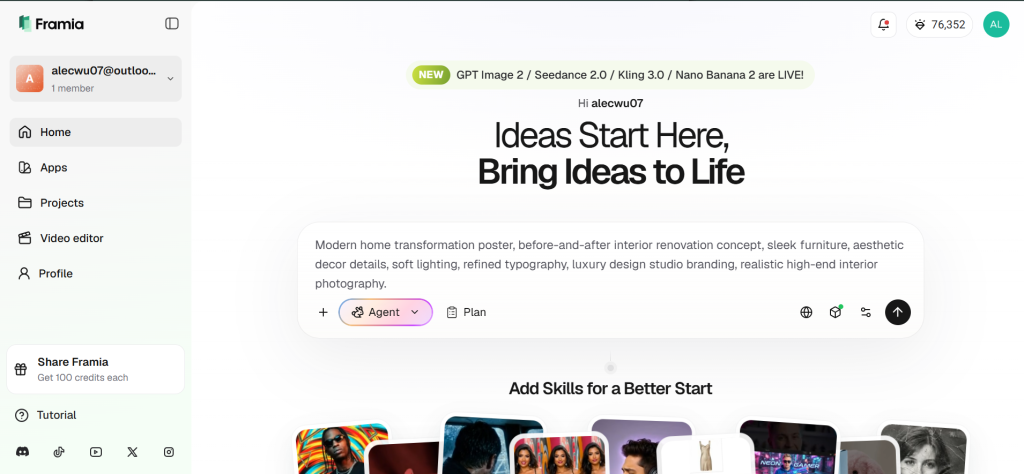
With Framia, you no longer have to consider content production a linear process.
The intelligent canvas for collaborative design exploration
The Intelligent Canvas is one of Framia’s standout features. Not many interior design projects go through conception to approval without revisions. The client might ask for an alternative color scheme. There could be changes needed in furniture placement. The mood board may need to adopt an entirely new visual direction.
Without having to recreate all the assets from scratch, designers can make changes right on the canvas itself using conversational prompts.
Want a softer ambience?
Highlight the image and make the prompt for the change.
Go for minimalism?
Pick out the relevant area and explain what you want done.
Conversational edits allow for greater flow in the design process without unnecessary repetitions.
Creating mood boards and concept presentations faster
Mood boards are usually the starting point in interior design communication.
It helps lay the groundwork for the look and feel of the designs, materials, color schemes, and even the emotional tone that goes into the project.
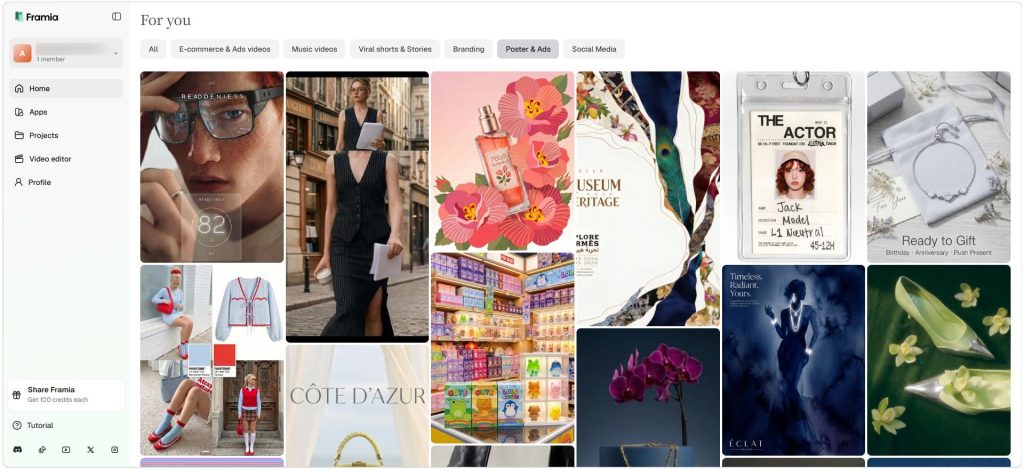
Framia’s advanced image generation and focus on the design process enable teams to try out different concepts rapidly.
With the aid of the Design Agent, you can craft:
- Mood boards
- Client presentations
- Project proposals
- Visuals for social media
- Graphics for marketing
- Assets for your portfolio
Due to the ability to incorporate such elements as branding components and visual identity straight into the workflow, design studios will be able to look professional in all their client-facing products.
AI agents dedicated to visual storytelling
Interior design involves storytelling in the end.
Each room has a unique story that speaks about the lifestyle and interaction of its users.
Framia has designed unique creative agents to help tell stories visually.
With the aid of the Video Agent, it will be possible to create:
- Videos showcasing project walk-through
- Videos presenting project concepts
- Presentation videos
- Campaign visuals for social media
- Marketing visuals for property projects
The Shorts Agent, on the other hand, will allow studios to produce short visual content specifically suited for certain platforms.
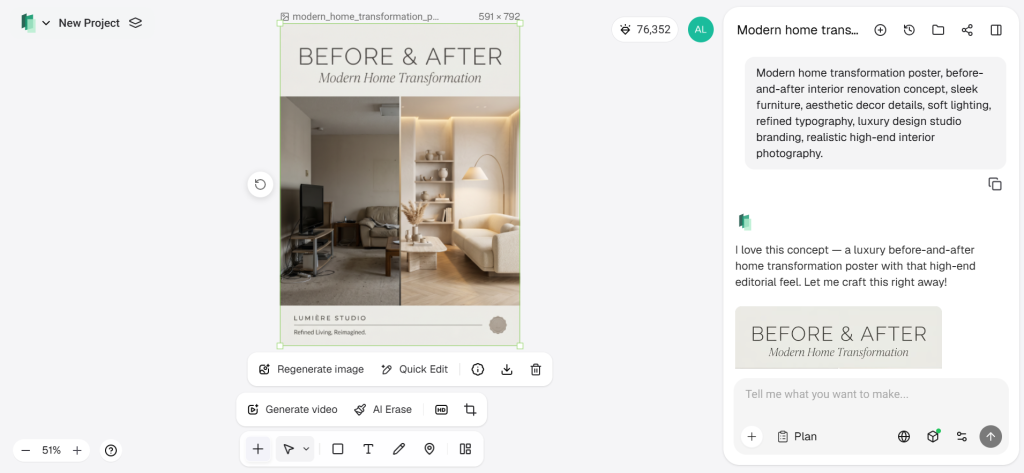
From creation to refinement without having to leave the workspace
One of the standout features of Framia is its focus on iterative creativity.
Projects are in a constant state of development.
Feedback from clients is offered.
The material that is being worked with changes.
New budgets come into play.
Timeframes get modified.
Framia’s ability to generate editable output files, conversationally edit content, and offer an integrated workspace makes refining creative assets much simpler without having to constantly switch platforms.
From visual content to digital experiences
Producing impressive presentations for a portfolio can go far when expanding a business focused on interior design services.
Once a studio has created beautiful visuals, it requires a platform for presenting them online.
This marks the logical transition to the next stage of the workflow.
While Framia concentrates on creative content creation and refinement, Enter specializes in creating digital experiences.
Creating professional websites for design studios using Enter
For most design studios, a website is used as a portfolio and source of leads.
The website highlights their past work, showcases their experience, and allows potential customers to discover what services the design studio offers.
However, creating and managing digital experiences can be demanding and resource-intensive.
Using Enter makes it easier since it becomes an AI-native development and productivity operating system.
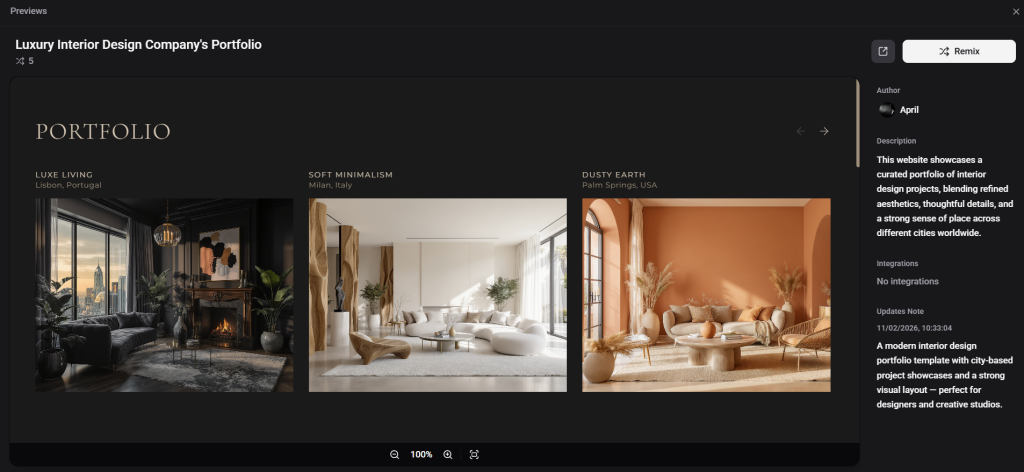
Converting portfolios to engaging client experiences
The modern-day client requires more than just static portfolios.
They would like to see projects, design styles, understand what services they offer, and contact them conveniently.
Using Enter, businesses can create:
- Portfolio websites
- Showcase design websites
- Client onboarding websites
- Project inquiry websites
- Resource websites
- Service pages
AI-assisted application generation and visual design help design studios to create professional websites without the need for traditional software development methodologies.
Smart growth via effective digital infrastructure
As studios grow, the demands on them grow as well.
Systems for
- lead generation,
- customer communication,
- inquiries about projects,
- team collaboration, and
- content management
are just some of the things that may be needed.
Enter helps achieve this goal by allowing AI-assisted creation of projects, providing a collaborative workspace, and creating a scalable and flexible digital infrastructure.
This allows studios to expand their web presence without compromising their professional appearance.
Creating connections between operations and creative workflows
The link between Framia and Enter provides an especially powerful workflow.
Conceptions, mood boards, videos, and project galleries made in Framia can serve as the basis for website and client portal development in Enter.
This creates a more cohesive platform where creativity and business processes go hand in hand.
The benefits of AI-powered design process for interior studios
A unified creative and digital workflow can provide designers with many benefits.
Faster presentation of designs
More efficient conception and development means that clients can see concepts faster.
Improved communication with clients
Visual storytelling improves the understanding of designs.
Enhanced marketing possibilities
Studios can develop consistent materials for their websites, social media accounts, and marketing campaigns.
Greater operational efficiency
Workflow integration ensures that less time is spent moving between various pieces of software.
Scalable business growth
High-quality digital experiences can attract new customers and provide scalability for businesses.
Best practices for using AI in interior design workflows
Putting creativity first
AI technology can be used to augment creative capabilities, not substitute them.
Using visual storytelling in presentations
Each presentation should tell an informative story about the client and their interests.
Staying consistent
A design studio should maintain its visual identity across different channels.
Embracing iteration
Effective design processes should be flexible enough to include iterations and testing.
The future of interior design is connected
Interior design in the future is not about producing more visuals. It’s about creating efficient workflows that enable designers to convey their message to clients better and increase business profitability.
Framia and Enter are good examples of platforms where designers can create connected experiences. The former provides users with an integrated design solution for making mood boards, presentations, design visuals, and portfolio pages. Enter is a platform that takes assets created in Framia and turns them into digital experiences.
Incorporating AI into such workflow processes can ensure success and profitability of the businesses of the future.